What does a person want from life?
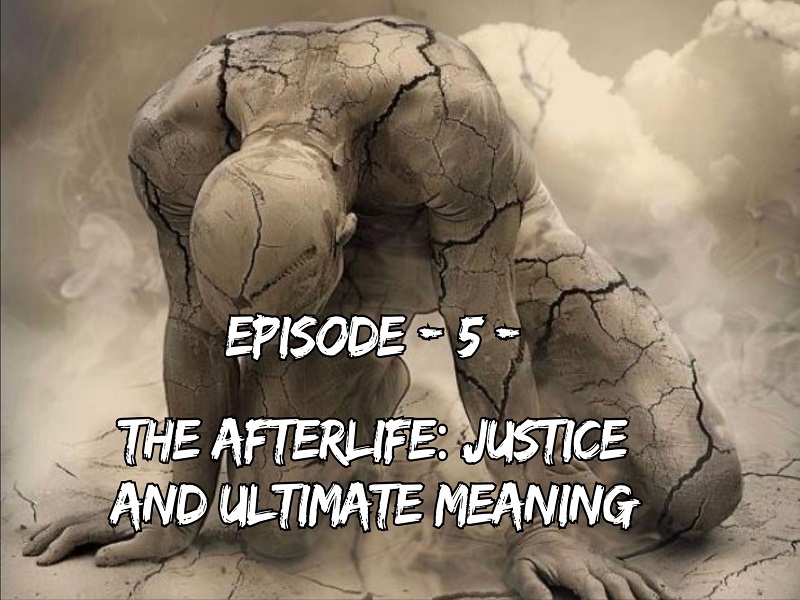
Episode – 5 – The afterlife: justice and ultimate meaning
Human questions about life are incomplete without this crucial question: Does the story end here?
Everything that man has experienced in terms of freedom and choice, pain and evil, death and loss, remains incompletely understood unless he has a final horizon in which the whole picture is understood.
In Islam, the afterlife is not a compensatory concept or a psychological refuge to escape the harshness of reality, but rather the natural extension of the meaning of life. This world alone is insufficient to explain justice, to contain meaning, or to do justice to all human experiences.
In this life, the oppressed sometimes die without justice, the oppressor lives without being held accountable, the undeserving are rewarded, and those who dedicated their lives to good are neglected. If this were the end, life would descend into moral chaos, devoid of any balance. But Islam rejects this notion entirely.
In the Islamic perspective, the afterlife is the arena of perfect justice. There, no value is lost, no intention is forgotten, and no deed is neglected, no matter how small or hidden it may seem. Divine justice is not measured by the speed of its execution, but by its perfection. What is not completed here will be fulfilled there.
But the afterlife is not merely a judgment; it is also a revelation. A revelation of the truth as it is, without masks or justifications. On that day, a person will not be questioned about what they were incapable of, but about what they chose when they were capable. They will not be held accountable for what was imposed upon them, but for what emanated from them and expressed their awareness and conscience.
Thus, the meaning of success and failure changes. Value lies not in longevity, nor in the abundance of outward achievements, but in sincerity, inner consistency, and in living according to what one believes to be right. The afterlife does not re-evaluate life by worldly standards, but rather reveals its true meaning.
In this context, pain acquires meaning, patience gains value, justice has weight, and goodness has purpose, even if it appears weak or defeated in the moment. For the afterlife rearranges the narratives and puts everything in its rightful place.
In Islam, heaven and hell are not merely symbolic images, but rather expressions of the natural conclusion of two distinct paths: a path of awareness and responsibility, and a path of denial and separation. Each person journeys toward what resembles them, and what they have chosen for themselves in this life.
Belief in the afterlife does not diminish a person’s presence in this world; rather, it gives it greater depth. One does not live without accountability, nor work without hope, nor suffer without expectation. One understands that life is not everything, but it is not without value either.
Thus, in Islam, the afterlife becomes the ultimate meaning that gathers together the scattered questions, brings together the ends of the journey, and gives man the assurance that this life, with all that it contains, was not in vain, nor was it for nothing.
And so the cycle is complete: from the question of meaning, to freedom of choice, to pain and death, to ultimate justice. The journey remains open to every human being… to read, to think, and to choose their place within it.
What does a person want from life?
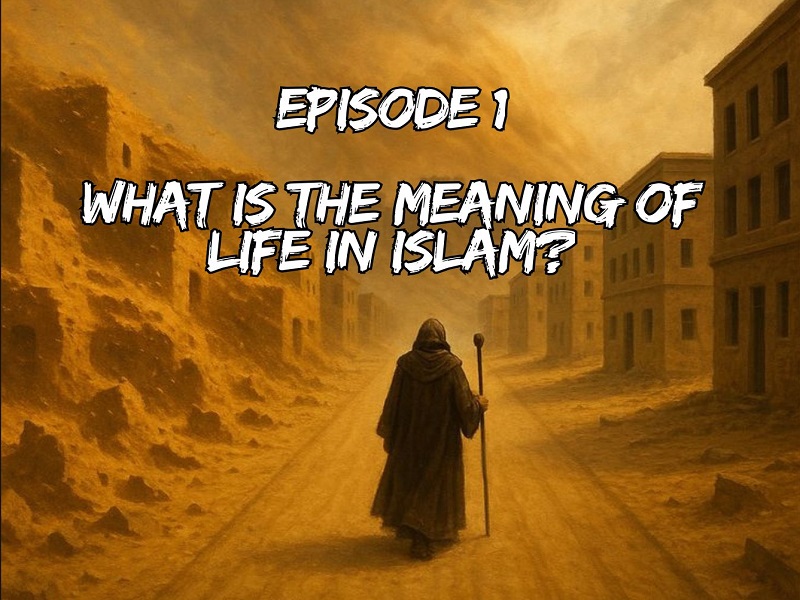
Episode – 1 – What is the meaning of life in Islam?
Episode – 2 – Man between freedom and choice in Islam
Episode – 3 – Pain and evil: How does Islam explain them?
Episode – 4 – Death: an end or a transition?
Episode – 5 – The afterlife: justice and ultimate meaning
Series conclusion. How does this understanding change in human life?