What does a person want from life?
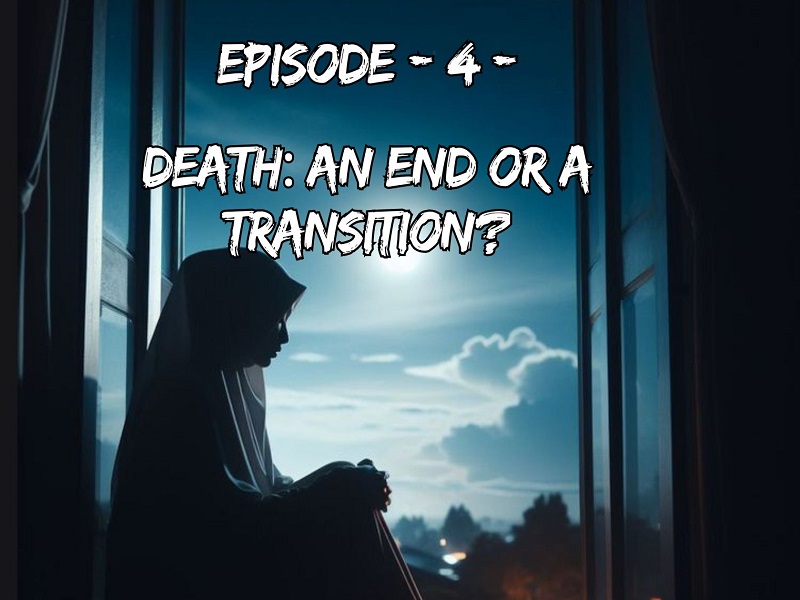
Episode – 4 – Death: an end or a transition?
No event is as powerful as death in its ability to silence all questions, and no question awakens humanity from its slumber like the question of death itself. Death is the one truth upon which all people agree, yet they differ radically in its interpretation: Is it the end of everything? Or the beginning of something else?
In the Islamic worldview, death is not seen as annihilation, but as a transition. A transition from one stage to another, from a limited life to a broader one. Death is not the opposite of life, but a part of its course; not a break with existence, but a transformation in its form.
Islam presents death as a moment of revelation, not a moment of loss. It is a moment when a person transitions from the realm of partial unseen knowledge to the realm of complete unseen knowledge, where meanings that were obscure become clear, and experiences that seemed harsh or inexplicable are understood. Therefore, the question in Islam is not: Why do we die? But rather: How do we live before we die?
The fear of death, at its core, is not a fear of cessation, but a fear of the unknown, of judgment, and of our lives being rendered meaningless. This is why Islam organically links life and death: as you live, so you die; as you sow, so you reap. Death does not create truth; it reveals it.
In this understanding, death does not negate what a person has done, nor does it erase its impact; rather, it confirms it. The moment the capacity for choice ends, the moment the consequences of those choices begin to manifest. Thus, death becomes a measure of meaning: Was life a conscious journey, or merely a heedless passage?
Viewing death as a transition does not diminish its pain. Islam acknowledges the anguish of loss, the sorrow of farewell, and the weight of absence. Crying is not a sign of weakness, and grief is not protest, but rather a genuine human expression. However, this grief does not transform into despair, because, in this understanding, separation is not eternal.
Without belief in the afterlife, death loses its meaning and becomes an ultimate injustice, especially when it befalls the innocent or ends a life before its fulfillment. In the Islamic perspective, however, death restores balance to justice, granting every story a just conclusion, even if delayed.
Islam does not ask a person to wish for death, nor to flee from life, but rather to live it with a consciousness that prepares them for the transition when their time comes. In this understanding, life is not about waiting for death, but about preparing for it, not through fear, but through meaning.
Thus, in Islam, death is not a dead end, but a door. A door that closes one life behind a person and opens a wider reality before them. From this, the question shifts once again: if there is a transition, what awaits a person afterward? And how does Islam view the life that follows this one? This is what we will explore in the next episode.
What does a person want from life?
Episode – 1 – What is the meaning of life in Islam?
Episode – 2 – Man between freedom and choice in Islam
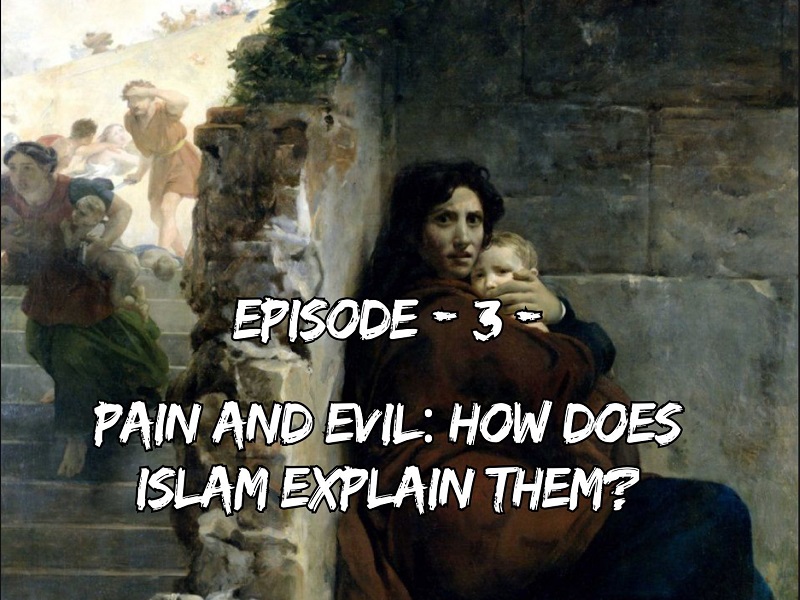
Episode – 3 – Pain and evil: How does Islam explain them?
Episode – 4 – Death: an end or a transition?
Episode – 5 – The afterlife: justice and ultimate meaning
Series conclusion. How does this understanding change in human life?